
Engineering KPIs: Measure the System, Not Just the Team
A balanced KPI set for reliability, work control, cost and improvement in a food-manufacturing engineering function.
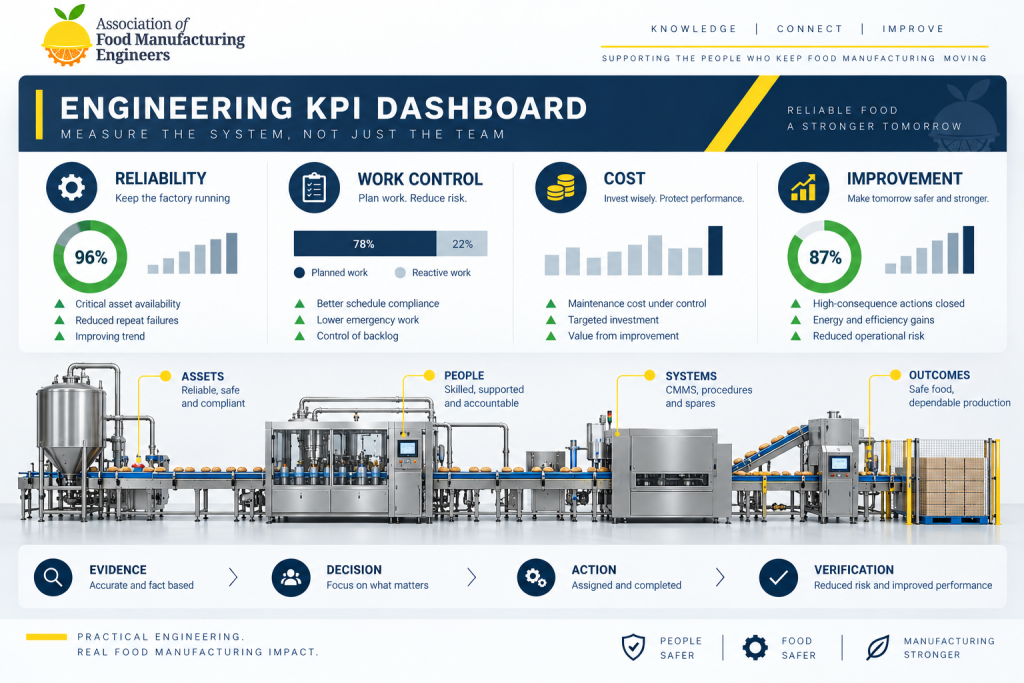
Why this matters in food manufacturing Engineering performance cannot be reduced to breakdown minutes or maintenance spend. Those numbers are affected by asset age, production plan, capital history and operating discipline. A balanced set combines outcome measures with leading indicators that show whether the maintenance system is under control. 1. Reliability outcomes Track consequential downtime, repeat failures, MTBF where statistically useful and availability of critical assets. Use Pareto analysis rather than averaging unlike equipment. Separate planned losses from unplanned failures and distinguish engineering causes from operational or material constraints. 2. Work-management indicators Measure planned-versus-reactive work, schedule compliance, emergency work, backlog age and overdue critical PPM. These show whether the team has control of demand. High PPM compliance is only positive if the PPM itself is technically effective. 3. Cost and resource indicators Track maintenance cost against an appropriate denominator, overtime, contractor spend and high-value spares. Explain major variances rather than driving arbitrary monthly reductions. Under-spending can be as dangerous as overspending if it creates deferred maintenance. 4. Improvement and risk indicators Include temporary repairs, obsolescence exposure, energy projects, root-cause action…
Continue reading with AFME
This article preview is public. The complete engineering article is available to approved AFME members.