
Permit to Work: Quality Over Paperwork
How to use permit systems as a real risk-control conversation rather than a form-completion exercise.
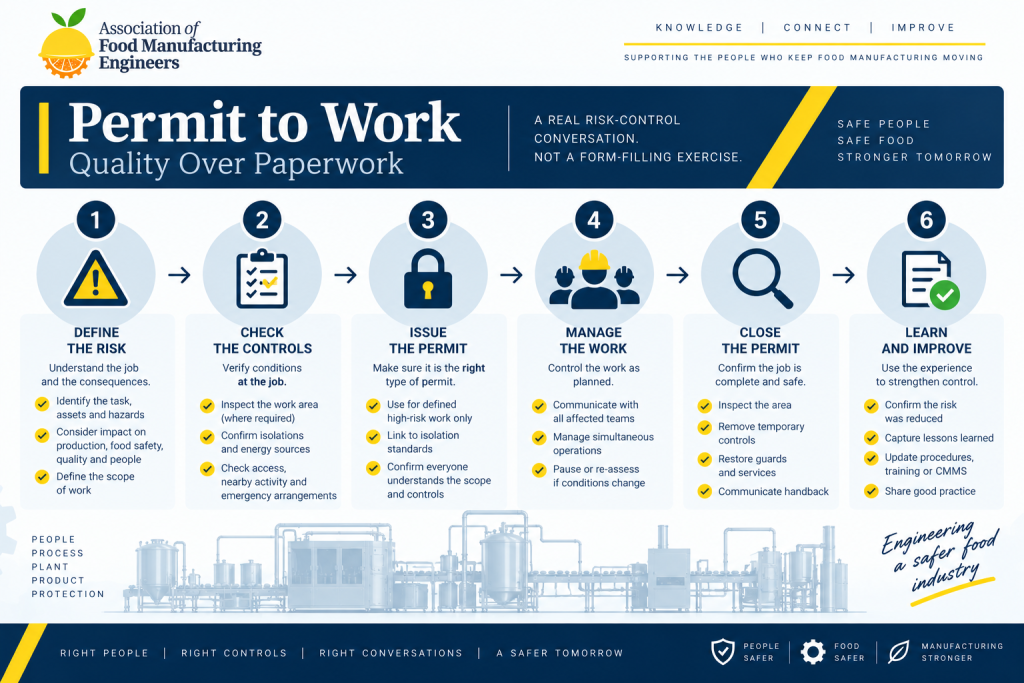
Why this matters in food manufacturing A permit-to-work system exists to make high-risk work conditions explicit before the job starts. The signed form is evidence of that conversation, not the control itself. Poor permit systems create large amounts of paperwork while hazards, isolations and simultaneous operations remain unclear. 1. Use permits for defined high-risk work Set clear site rules for activities requiring permits, such as hot work, confined space, excavation, roof access or other locally defined hazards. Avoid using permits for every maintenance task simply to appear controlled. Overuse reduces attention and turns permit issue into administration. 2. Verify conditions at the job The issuer and receiver should understand the actual work area, energy sources, nearby production, access and emergency arrangements. Where the risk warrants it, inspect the location together. Do not issue a permit from a desk based only on a generic method statement. 3. Link permits to isolation Where isolation is required, identify the isolation standard and confirm who controls it. The permit should not become a substitute for lockout/tagout or electrical safe isolation. Changes to scope or…
Continue reading with AFME
This article preview is public. The complete engineering article is available to approved AFME members.